
Echizen cutlery
The sharpness of the craftsmanship inherited!
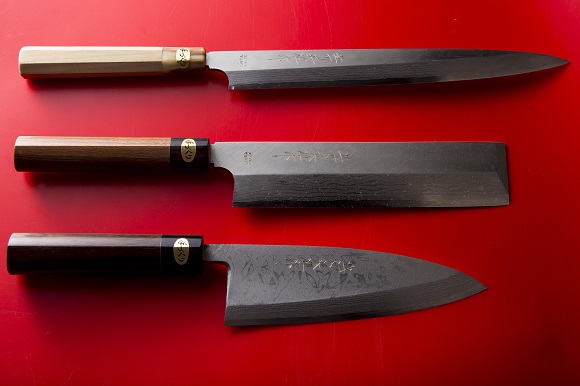
The blade is made from two materials
Steel / Blade part ①
A hard material with a high carbon content that becomes the part of the blade that cuts. Various steels are used depending on the purpose of the blade.
Base metal (body) / body part ②
A soft material with low carbon content. Combined with hard but brittle steel, it plays a role of giving strength.
Double-edged knife manufacturing process
① Steel making and base iron making
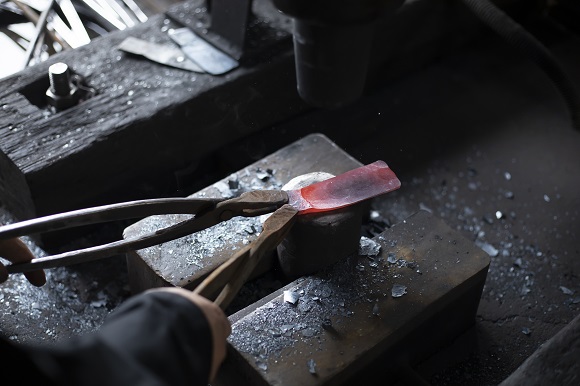
Heat steel to 800 ℃ and hit it with a hammer etc. to forge it to a predetermined size (tanzo / strong metal structure).
②Interruption / heating
The steel is broken into pieces, the grooves are inserted, and the steel is inserted and hit to forge weld the steel and the iron.
③ Preliminary / core picking
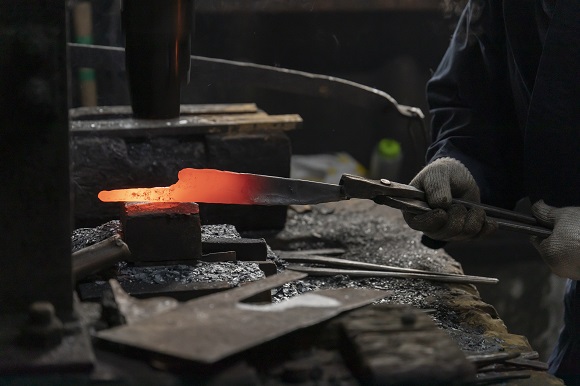
Shape the flat part of the kitchen knife and cut it into the size of one kitchen knife. After that, the part (core) inside the handle is forged.
④ Spread two pieces (traditional technique peculiar to Echizen Uchihamono)
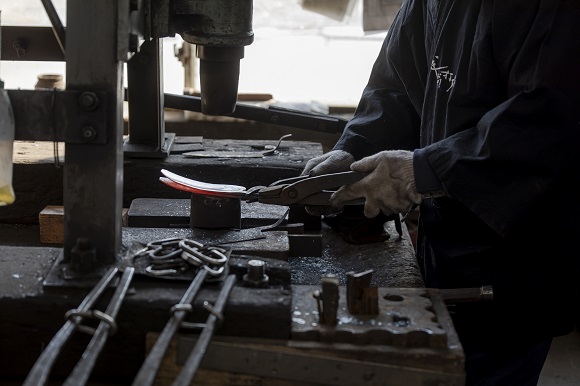
Stack two blades and hit them with a belt hammer from the front and back, and quickly process the two so that they extend thinly at the same time. Since the thickness doubles by stacking, the compression force with the belt hammer is strengthened and efficient. Furthermore, since the temperature is less likely to drop, the unevenness of the plate on the surface of the blade is reduced.
⑤ Mud sound and break-in
Remove the deposits and smooth the surface with a belt hammer. After flattening and adjusting, cut off the excess.
⑥ Quenching and tempering
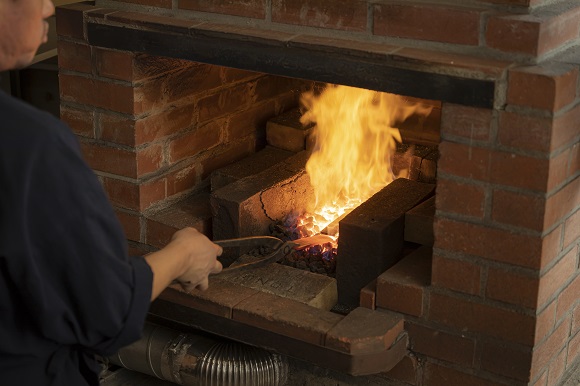
To prevent uneven baking, apply mud on the surface, heat to 800 ° C, quickly cool with water and bake. After that, in order to make the steel sticky, heat it at 150-220 ℃ for about 30 minutes and gradually cool it at room temperature.
⑦ Sharpening and finishing
Completely grind up the rough and medium whetstones, middle whetstones, and finish whetstones in this order, and attach a handle.
Complete!
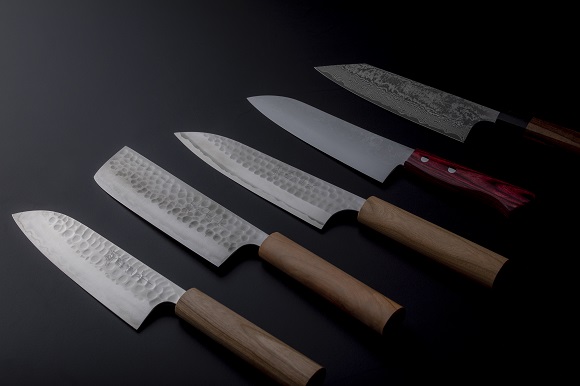
The sharpness created by craftsmanship is highly evaluated not only in Japan but also overseas.
Traditional technique (sickle) unique to Echizen Uchihamono
Turning steel
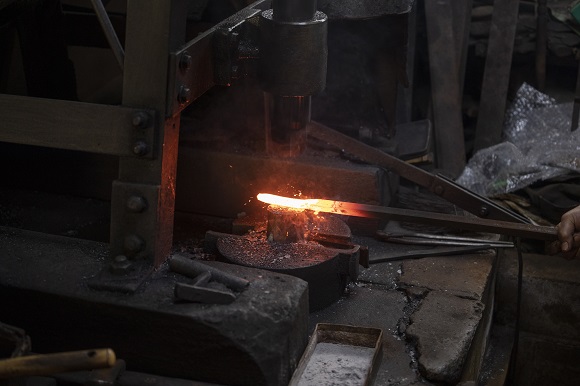
A technique that is said to have been invented by Chiyozuru Kuniyasu, the founder of Echizen Uchihamono. While turning the steel vertically elongated base iron, hit the corner surface of the base iron into a rhombus and extend it so that the steel is wrapped. The surface of the blade is less likely to be covered with base metal, and the steel does not hit the fire directly, which prevents the steel from becoming brittle due to heating. This method, in which steel is attached (forged) to a vertically long base metal, is also called the "masaiki method," and requires a considerable amount of technology compared to general methods.
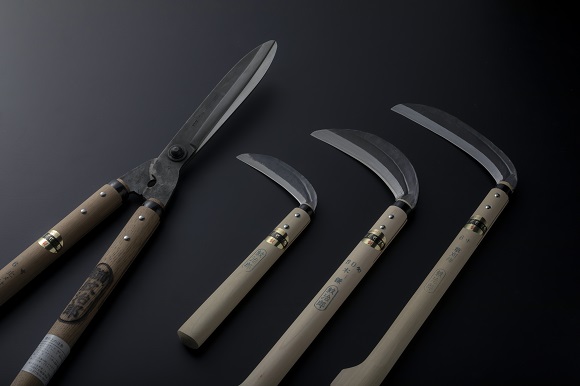
By making full use of this technique to make the steel thinner and more uniform, it becomes a blade that is easy to sharpen, has a sharp edge, and can be used for a long time.
Link
About Echizen Uchihamono
Echizen Uchihamono traditional craftsman introduction
Echizen Uchihamono Factory Introduction