
About Echizen Cutlery
The history of Echizen blades 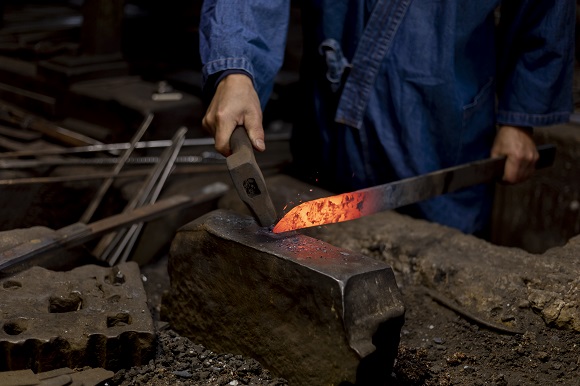
Its origins date back about 700 years. During the Nanboku-cho period, a swordsmith from Kyoto, Chiyozuru Kuniyasu, came to Fuchu (present-day Echizen City) in search of a place suitable for sword making. It is said to have begun when he taught blacksmiths in nearby areas how to make sickles. During the Edo period, it spread throughout Japan as a specialty of Echizen Province, and sickles in particular became the number one product produced in the country. In 1979, its history and techniques were so highly praised that it became the first knife-producing region in the country to be designated a traditional craft. Even today, the region continues to pursue functionality and design while preserving Japan's ancient fire-forged forging techniques and hand finishing, earning it high praise both at home and abroad.
The thoughts of the founder of blade-making
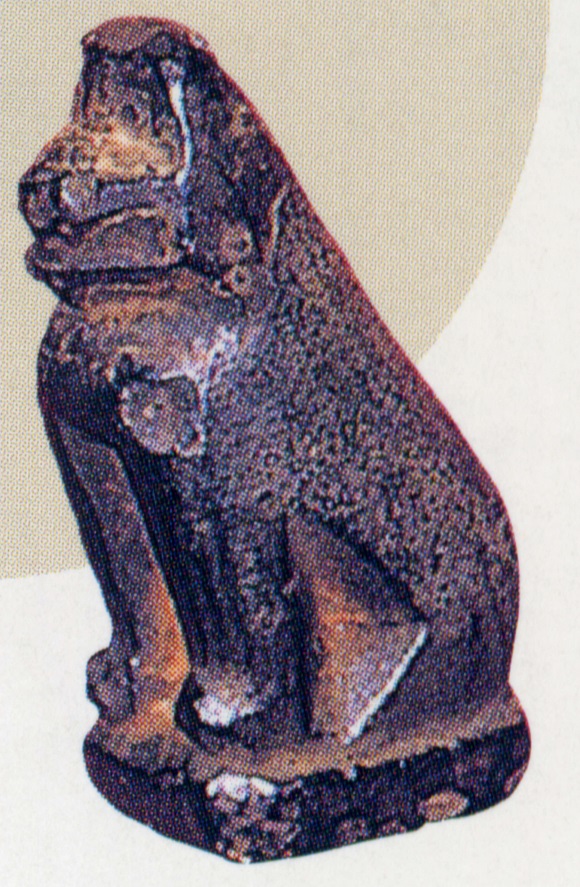
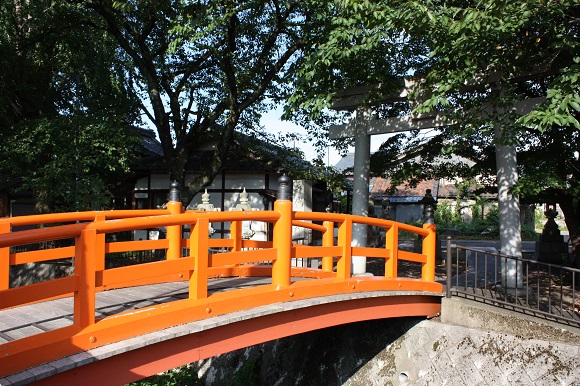
Chiyozuru Kuniyasu carved the lion-dog statues into a whetstone and sank them into the pond with the wish that "swords should not be used to kill people, but should exist as a symbol of the samurai." The pond still remains at Chiyozuru Shrine as "Chiyozuru Pond."
Chiyozuru Shrine / 2-4-13 Kyomachi, Echizen City, Fukui Prefecture
Midnight Traditional Training "First Hit"
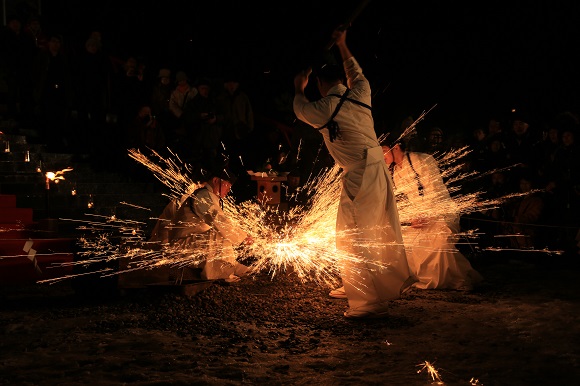
Every year at midnight on New Year's Day, the "first strike" of the ancient forging technique is held at Takefu Knife Village, with the hope of a prosperous new year. A master and apprentice dressed in traditional white robes and black hats create wind, heat the iron to red hot, and forge the blade. The trinity emerges from the darkness in flames, creating a brave and fantastical sight.
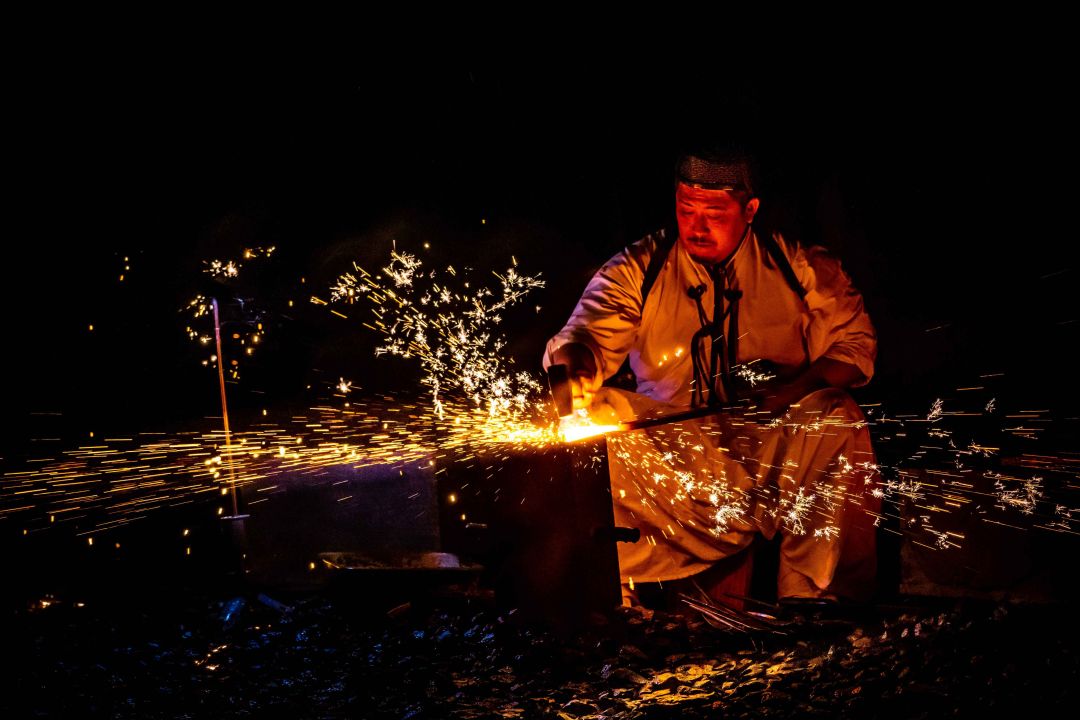
A photo contest will also be held in conjunction with the "first hit." The photo above shows the 2024 grand prize winning entry.
Types of Echizen blades
Single-edged
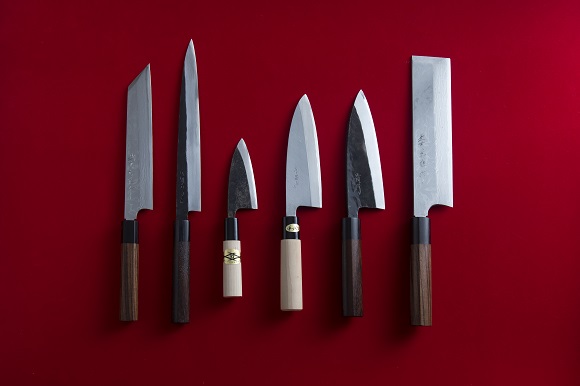
Many Japanese knives used by chefs, such as sashimi knives and deba knives, are single-edged knives. They are made using the "hirawakashi" method, in which steel is placed on top of the jigane, with one piece of jigane (base steel) for the body and one piece of hagane (steel) for the blade. Because they can cut without destroying the structure of the material, they are well suited to Japanese fish dishes, which require beautiful cross-sections.
Double-edged
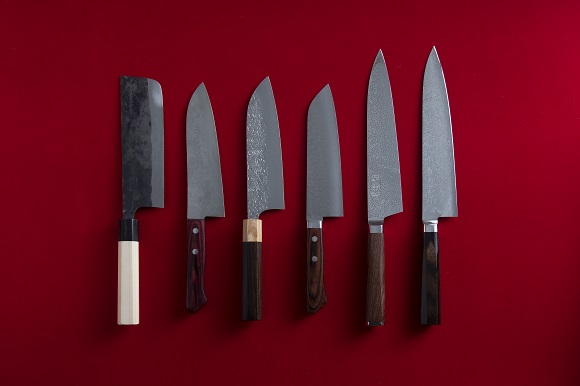
Double-edged knives include the Santoku knife and Nakiri knife used at home, and the chef's ...
Sickle
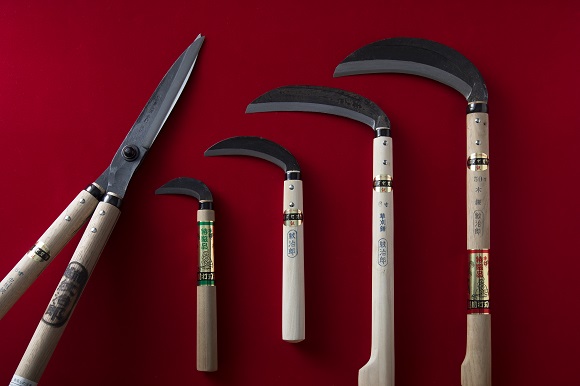
Using the traditional Echizen blade-making technique of "Mawashihaganetsuki," the steel is stretched thinner and more uniformly, making it easier to sharpen and resulting in a sharper blade.
Three facilities where you can experience Echizen cutlery
Echizen Chiyozuru no Yakata, Echizen Cutlery Promotion Facility
We promote cutting tools through demonstrations and exhibitions.
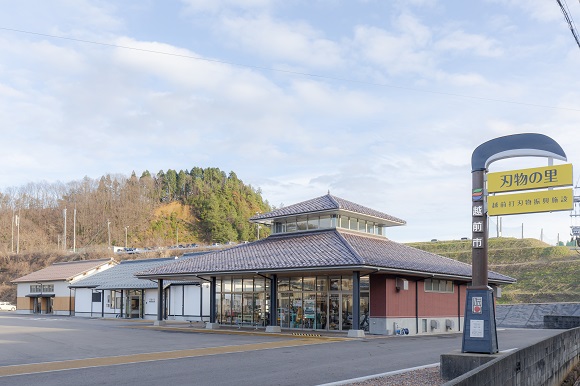 This facility promotes the history and craft culture of Echizen blades through displays of knives produced in each workshop and forging demonstrations by traditional craftsmen. It also holds hand-sharpening classes where you can learn how to sharpen knives from craftsmen.
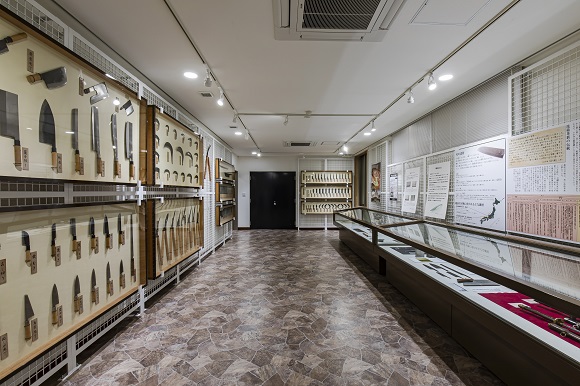
The history and techniques of Echizen blades are on display in the exhibition room, and a video of the manufacturing process can be viewed in the lobby.
●Production demonstrations available (irregularly)
●Exhibits available
48-6-1 Ikenouecho, Echizen City, Fukui Prefecture
0778-22-1241
Opening hours: 9:00-17:00
Closed: Tuesdays, New Year's holidays
Echizen Cutlery Hall
A production hub where blacksmith workshops gather.
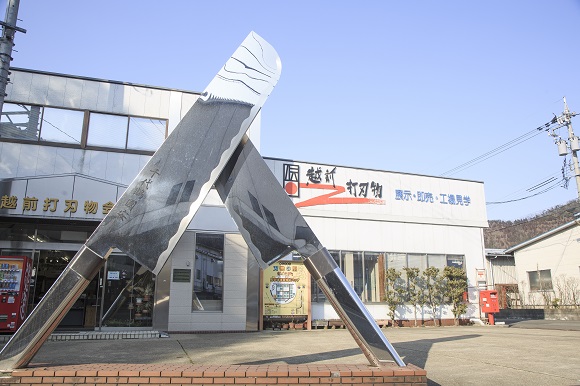
The landmark is a monument of a Santoku knife and a Nakiri knife that are over 4 meters tall. Knives made with traditional techniques can be purchased at reasonable prices that can only be found in the area where they are made. You can also enjoy the exhibits related to the history of forged cutlery.
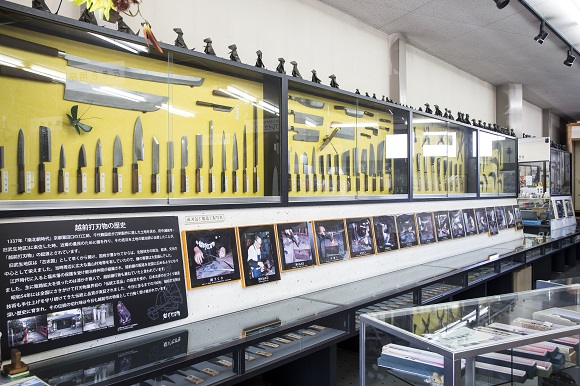
In addition to displaying the products they manufacture by type, they also introduce the 700-year history and manufacturing process of Echizen hammered blades through panel displays and videos.
●Product purchase available●Video viewing available
49-1-3 Ikenouecho, Echizen City, Fukui Prefecture
0778-24-1200
Opening hours: 8:30-17:00 (Sundays and holidays: 9:30-16:00)
Closed: New Year's holiday (Factory tours are closed on Sundays and public holidays)
Takefu Knife Village
The sight of the craftsmen at work is spectacular!

A joint workshop for cutlery craftsmen. It is rare nationwide to be able to see so many craftsmen at work in one place. You can also experience craftsmanship up close through production experiences and a direct sales shop.
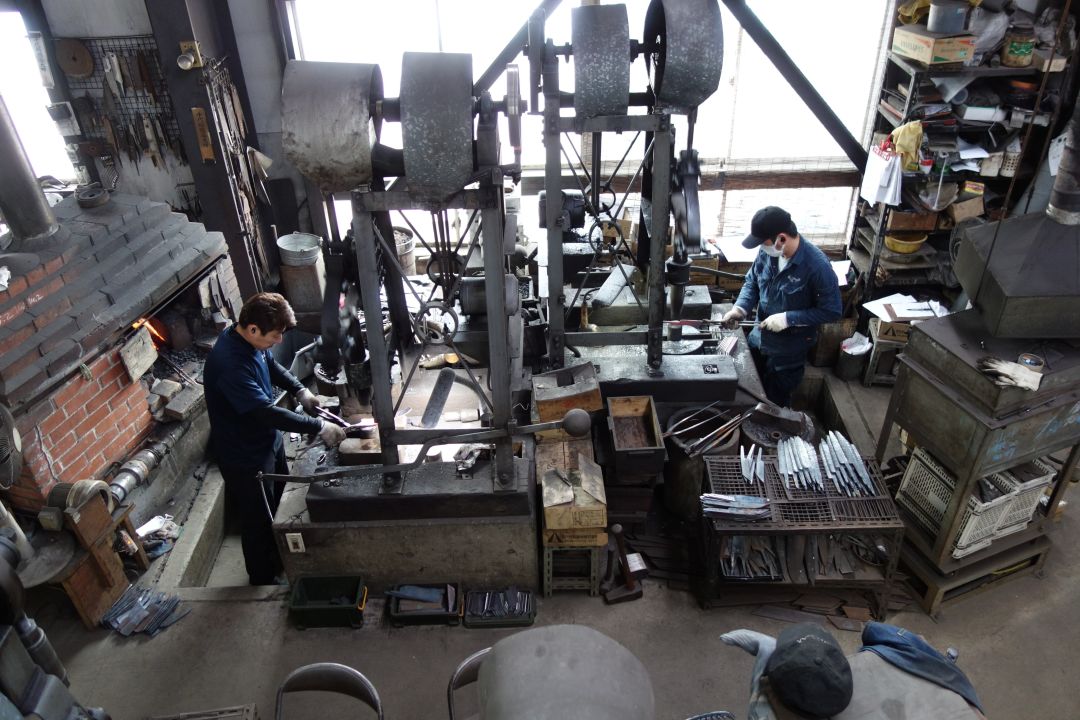
From the observation path that goes up the slope, you can get a panoramic view of the craftsmen at work, forging, sharpening, etc. The powerful sound of the blades being struck is overwhelming.
●Experiences available●Product purchases available●Workshop tours available●Exhibitions available
22-91 Yokawacho, Echizen City, Fukui Prefecture
0778-27-7120
Opening hours: 9:00-17:00
Closed: New Year's holiday
link
How Echizen blades are made
Introducing the Echizen Cutlery Traditional Craftsmen
Introduction to Echizen Cutlery Workshop