Other
Other
Contents
◆To All Bicycle users Traffic violators will be issued with “Blue Ticket” from April 1st !
◆Parenting Support Community POPPO♡ A Place to Share the Moment
◆Walk Around Kawaguchi with 10,000 Steps.
◆Let’s Make Friends with Playing Beigoma at Kawaguchi Municipal Folk Museum!
◆School Playing Various Roles as the Sole Public Night-time Junior High School in Saitama Prefecture
◆Let’s Explore Cupo・la M4-Floor! 〜Counseling Desk for Foreign Residents〜
◆Acquire Practical Japanese Skill at Shibazono Japanese Class!
To All Bicycle users Traffic violators will be issued with “Blue Ticket” from April 1st !
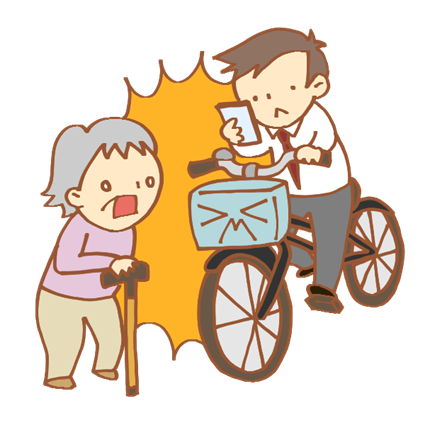
To all bicycle users, did you know that you will be issued with “Blue Tickets” from April 1st, 2026, if you violate traffic rules?
By this system, violators of traffic rules are obliged to pay a fixed fine (penalty) instead of being brought to a trial nor recorded as a criminal record (record of delinquencies kept at the authority). On the other hand, “Red Ticket (conceives the possibility of brought to a court trial)” remains for violators of drunk driving, obstructing driving, etc. This rule applies to age 16 and older cyclists.
An officer from Traffic Division, Kawaguchi Police Department filled me in on the introducing of “Blue Ticket” system. ‘We would like you all to be more attentive to safety cycling. Purpose of this system is not to catch and punish violators. We just want you to use bicycles not causing any accidents”, he passionately explained. With this “Blue Ticket” issuance system, I think we should pay further attention to safety cycling.
“Blue Ticket” will be issued for violations that deemed as malicious and dangerous. Here are major violations.
|
Violations |
Fine |
|
Use (Holding) of mobile phones while riding |
¥12,000 |
|
Enter railroad crossing when the gate is closing or after it is closed. |
¥7,000 |
|
Defective bicycle braking system (have no brakes) |
¥5,000 |
|
Violate traffic signal rules (Red light violation, etc.) |
¥6,000 |
|
Violation of stop sign, etc. at designated spaces (Stop sign violation) |
¥5,000 |
|
Obstructing crossing pedestrians, etc. |
¥6,000 |
Saitama Prefectural Police Department provides booklet on Traffic Safety Tutorials. Copies in Japanese, English, Chinese, Korean, Persian, Portuguese, Tagalog, Spanish, Vietnamese are available.
Booklets are also available via official website of Saitama Prefectural Police Department. Take this opportunity to check out traffic rules once more.
https://www.police.pref.saitama.lg.jp/f0010/kotsu/kyouikusidou/kyouikusiryou.html
Traffic Division of Kawaguchi City Police Department also provides Traffic Safety Sessions at requests of companies, residents’ associations, and peer groups. They also prepare interpreters on your prior request.
Let me say this in conclusion!
Put on a helmet whenever ride on a bicycle. Not wearing helmet is not subject to Blue Ticket issuance, however, bicycle is officially categorized as a vehicle to which the rule stipulates to run on roadways. To protect yourself, get ready to put on helmets!
Parenting Support Community♡POPPO A Place to Share the Moment
Do you know a parenting support community called “POPPO♡” (hereinafter called POPPO)? It is on the basement level 1st of SR・Hatogaya Station. After a train ride, pass through the ticket gate, take the exit No.1 and go down the stairs to the basement area. Then you will hear a cheerful voice of small children. POPPO is a parenting support community opens for age 0-3 children with an indoor playing space. This place, equipped with lots of toys and playground equipment as slide, etc., is always lively with kids and their parents. The space opens from Monday through Friday, from 9:00 to 12:00, and from 13:00 to 16:00.
Besides opens a space for kids to play, this place is also functioning as a hub of “Parenting Support Service” to provide parenting counseling, city’s reliable information about childrearing, and so forth. Being entrusted by the city of Kawaguchi, this place is operated by the Kawaguchi City Council of Social Welfare, Social Welfare Corporation. All staff members have such licenses as preschool teachers, etc.
As a matter of course, parenting mums and dads devote all their energies in taking care of babies, or tagging along with children. On the other hand, their connections to the outside world tend to dwindle away, a feeling of isolation slowly prey on. POPPO is a place where such parenting mums and dads can come and play with children. It also offers opportunity to meet other parenting friends in the area to have a talk and move forward together. In here, you will never feel “alone”. To grow together is what this place cares the most.
I asked them what was the strongest point of POPPO.
They said, ‘No need to book to come, and you can talk freely about trivial matters on your everyday life.’ Another perk is that children of different age come to this place. If you are new mum and dad, seeing children a bit older than yours playing around will make you imagine, ‘My little one is going to grow like this’. While others, parents of a little older one, can look back the time when their child was a baby, saying ‘I remember my child had this moment before’. In addition to this, the location, which is directly connected to SR Hatogaya Station, is perfect for you and your child to try to take a first train ride.
On the day I visited, I talked with two mums. We are not regular visitors, they said. ‘Sometimes we come here twice a week. Sometimes on a certain day of the week’. Have a few mum friends knowing each other by sight, though most of them are often seen spending the time in parent-child unit in here. Meeting at an event here may be a good chance to talk with other parents. What impressed me most was their remarks; ‘Nobody cares who else is playing in here’, ‘This place is firstcomer-friendly’. Others were also saying; ‘Staff members are kind enough to hear my silly complaints’, ‘It is good for me that I can come anytime I want because no booking is needed here’. Another mum said with a smile on her face; ‘My child has got bored with all the toys he has at home. Now he starts trying to grab household appliances instead of toys’, ‘Since POPPO has lots of toys, he seems happier than playing at home’.
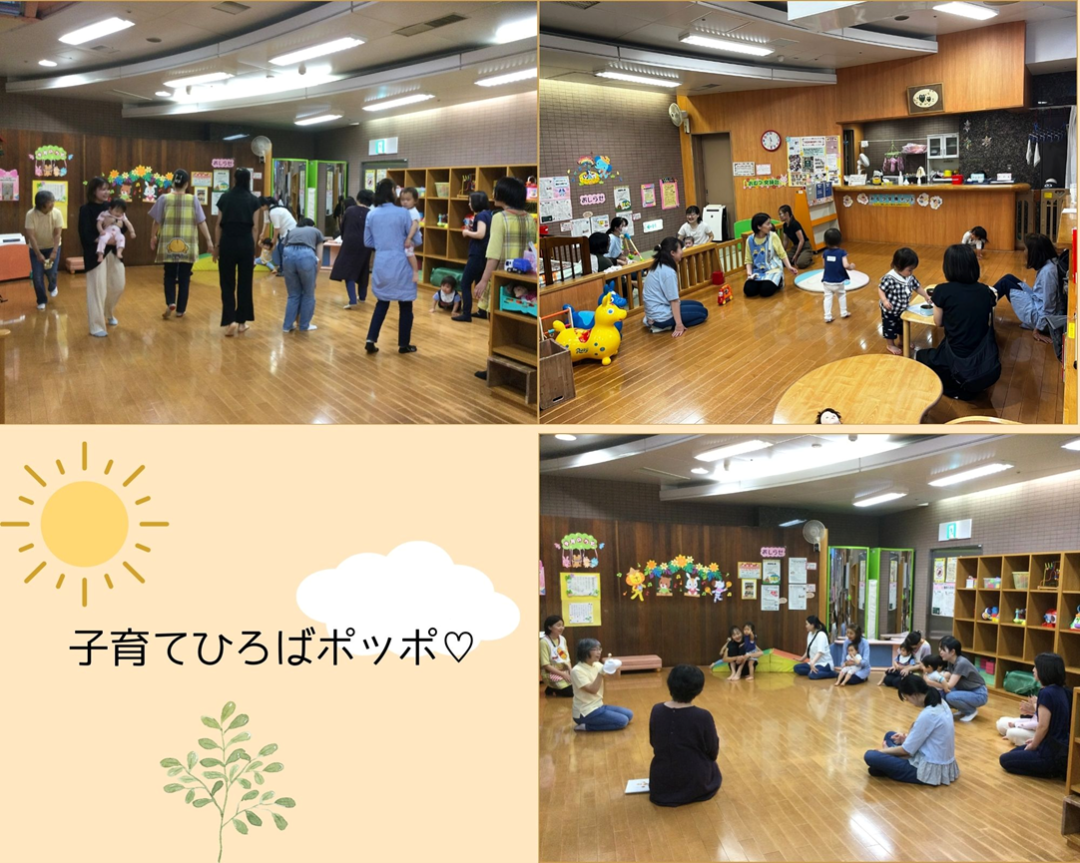
In here, parents and children are playing at their own paces at first. Then, conversation starts from nowhere and that gives the cue to play together with others.
This plate-glassed space can be well observed from the outside. Anybody can see what is going on inside, and that makes the threshold “easy to cross” for newcomers-to-be. Above all, what impresses me most is cheerful staff and open atmosphere.
First coming mums and dads’ faces are more or less all look tense. However, being embraced by the staff members’ warmhearted wishes; “Want them to make another happiest memory here”, “Want them to leave here with a smiling face” and their lovely words, newcomers’ tension would be released soon. You will see brilliant smiles on every parent and child’s face as they leave. After a few visits here, you will develop a new comradeship with peers to whom you can grumble about daily trivial matters or let out uncertainties about your own parenting in a much lighter note.
Even families of foreign origins such as China, Korea, Vietnam, etc., are frequent visitors here. Never being bothered by cultural nor language differences, they are sharing the same vibes with no difficulty through children. POPPO is always ready to use a translating gadget, but visitors rarely use it because plain Japanese, smiles, gestures, and spirit of “To deliver a message” and “To share the moment” are all they need in communication here. Almost nothing disturbs us, they said.
POPPO always welcomes you with open arms. For
those considering to visit here for the first time and have no idea what the place is like, try and use its open-house-like events. For starters, check with their “Babies’ Time” event on each Tuesday from 13:00–14:00. They will have no special programs for this event. Just spare a larger space only for this event for parents and babies in the same age-in-months group so that you can spend the time in a more relaxing atmosphere.
Even though language, culture and parenting style are all different, you can support each other in childrearing once you come to this place and share the same moment with others.
“Kosodatehiroba (Parenting Support Community) POPPO♡”
(The community’s operation is entrusted by the city of Kawaguchi and operated by the Kawaguchi City Council of Social Welfare, Social Welfare Corporation)
・Playing space Weekdays 9:00-12:00 / 13:00-16:00
・Parenting counseling Weekdays 9:00-12:00 / 13:00-17:00
URL:https://kosodate-kwgc-saitama-ksp.jp/poppo/
Editor’s note
As I was talking to the people here, I remembered what it was like my parenting days were.
My first parenting days had been a series of troubles and question marks on breast feeding/formula, hours of sleep, weaning food, etc.
During such turbulent days, I found POPPO, the place I could casually drop in and found someone who could closely listen to me.
I can still remember the moment how they welcomed me with broad smiles, even though I was such a premature mum.
I have not been to this place for a while, though they still remember about me and my child. Once again, I was welcomed by that unchanged warm smile. (YUBESHI)
Walk Around Kawaguchi with 10,000 Steps.
Evidently, walking is good to keep you sound and stay healthy. The Ministry of Health, Labor and Welfare also announces it is ideal to “Walk 10,000 steps a day”. However, I wonder how far can we get with 10,000 steps? To clear this question, I, a resident of Kawaguchi, tried how far I can get if I walk from Kawaguchi Station. I want you to walk with me on this “How far can I get with 10,000 steps’ walk” for a while.
OK! Let us get started! Start walking from Kawaguchi Station West Exit to Kawaguchi Nishi Koen-park. Not to mention rows of cherry blossoms you will enjoy in spring, you can always enjoy beautiful changing colors of seasonal leaves in this park. Among lots of distinguished statues, cute statuettes of the Oriental Annual Zodiac are sitting at the end of this park. You should try and find them. After you locate the statuettes, let us get back to the Kawaguchi Station West Exit.
From Kawaguchi Station West Exit, I proceed to go through an underpass which leads you to a bicycle parking space. There used to have a lot of shops in this underpass, and one of them was a shop where my husband bought his very first vinyl in his life.
Walk up the stairs to get to the Kawaguchi Station East Exit. So far, I have walked 1,800 steps. Our next destination is newly established Kawaguchi City Hall Main Building 2.
Although traffic is heavy on Shiyakusho-Mae-Dori Avenue, well laid sidewalks allow us to have a smooth walk on it. I tried to walk through a skywalk which connects City Hall Main Building 1 and 2 that had been stood-out even from its construction phase. It is like I am walking through a modern building of a museum of art! At this point, I have walked 3,400 steps.
Kept going to the north till I got to Aoki-Chuo Elementary School. Then turned right to get to Auto-Race -Dori Avenue. By the way, signs of “Flood Water Depth (Projected)” put up on utility poles along the way caught my attention. I looked up to see a level marked with red tape taped around the pole. This indicates an estimated height of inundation when a flood reaches the area. This fact I found during my walk aroused me the importance of “Provision Against Emergencies”.
As the motorcycle racing track pops up on your right, a huge shell top like building appeared in front of me! This is a water tower of Kawaguchi City Waterworks and Sewerage Bureau. As you get closer, you will realize how big it is. 5,400 steps I have made so far. Approximately an hour’s walk from where I started.
Passed Tatekawa Himon Koen-park, let us move on to SKIP CITY. I chose to walk through a residential area but had no problem to get the place because signs here and there showed me which way to take. I have been walking for almost an hour and a half, so I decided to take a rest for rehydration. Now, it is 7,900 steps I have walked.
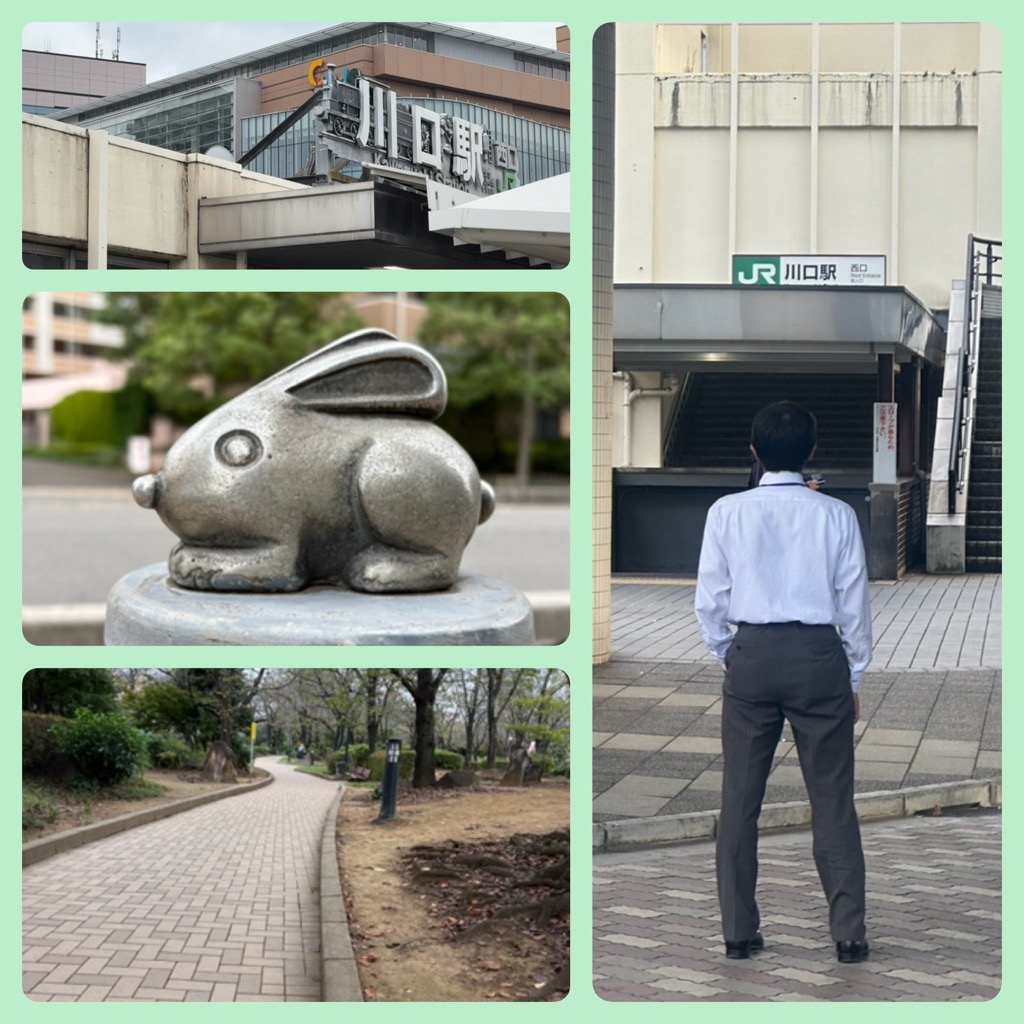
With 2,000 another step then I will reach the target of 10,000 steps, however, if you have come all the way to get here, there is no other way but to visit Kawaguchi Green Center to see and enjoy seasonal flowers! I will give it another go. I took the shortest course of taking Prefectural Highway No.332. Vowing traffic safety to myself to a Koban with checkered pattern walls on my right-hand side, I solemnly kept walking. Focusing on every step I make like this is what I have never done before. I walked along the gently curving street that leads me to the right, passed drug stores and convenience stores, I see a bridge ahead of me…but wait! I have reached my target of 10,000 steps at this point. Putting aside the idea of this 10,000 steps trial, I keep going on to the Green Center. Crossed over Kamine Bashi-bridge of which parapets are decorated with comma-shaped beads, kept on walking for 10 more minutes, then the Green Center, my final goal of the day, came into my view. Total steps I took from Kawaguchi Station East Exit reached 12,261. The time required for this walk was about 2 hours. City’s large illustrated map full of recommendation sites was put up at the entrance of the Green Center. As I seeing that, I felt like to find a course for another expedition. Today, I had no problems in walking since it had no slopes along the way. Why do not you find your own Kawaguchi expedition course on which you can walk on your own pace?
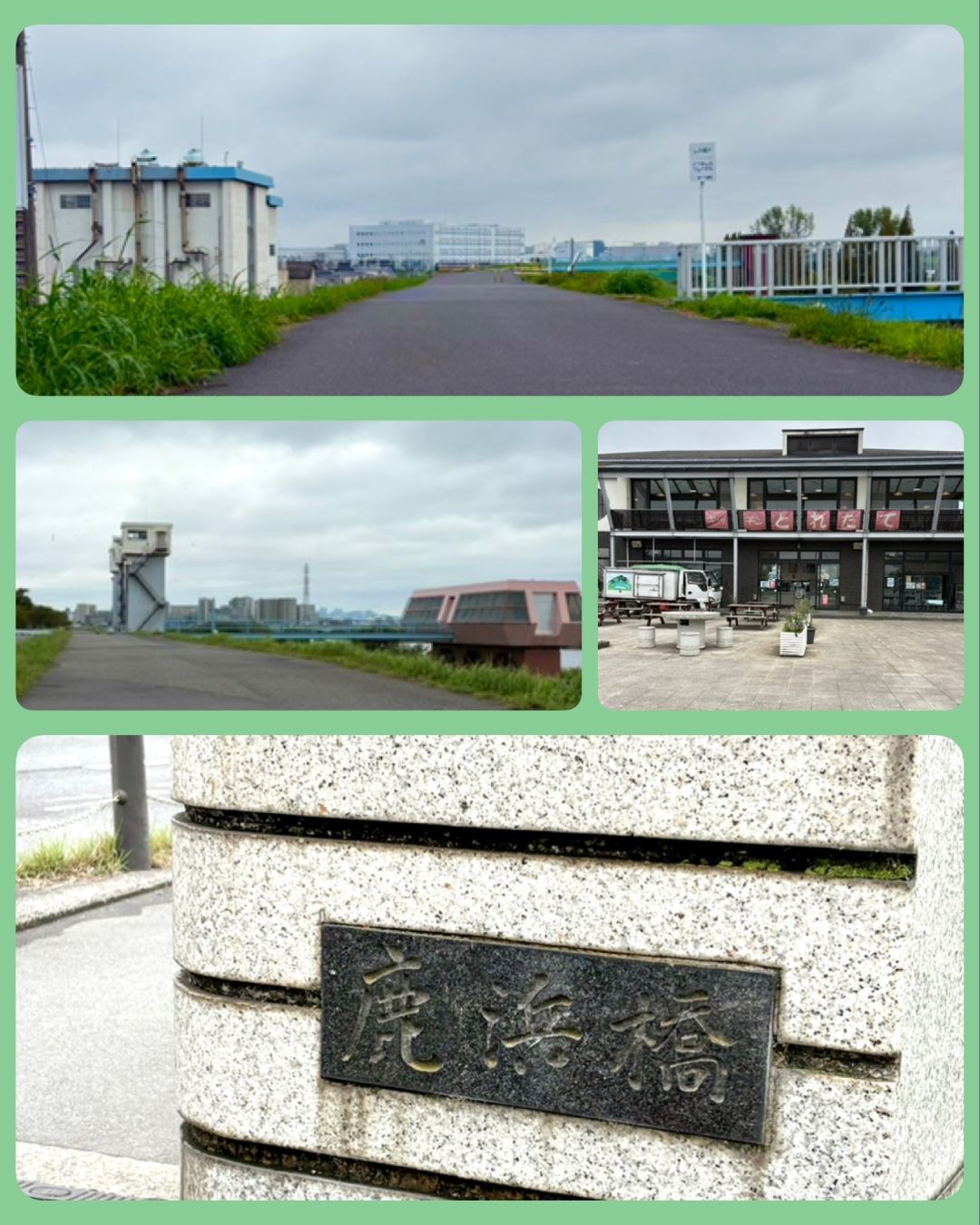
In that connection, I recommend this 10,000 steps course for you if you are worrying about getting lost in midway through the course. Start from the Station, head for Minami Junior High school, cross the National Highway No.122 and walk on a path atop an embankment of the Arakawa-river. When you get to Shikahama bashi-bridge, it is the point you can make a U-turn. Voilà! You have walked 10,000 steps to get there. A rest area is situated along this course to have a short rest while walking. All you got to do is just walk straight on. No way you will miss your way!
【Editor’s Note】
Let me say in passing that I successfully ended in losing 16 kg of my weight from 2-years of daily walking!
by Zunko
Let’s Make Friends with Playing Beigoma at Kawaguchi Municipal Folk Museum!
Kawaguchi, the city noted for producing Beigoma (spinning top)!
Did you know that “Folk Museum” of the Municipal Cultural Asset Center has a Beigoma playing space?
I just wanted to know what it is like, so I have come to the Folk Museum.
I was welcomed by Mr. Ide, a school program coordinator from Cultural Asset Division of Kawaguchi City Board of Education. How sociable and easy to talk to; that was my first impression on him. It made plenty of sense to me when I knew that he used to be an elementary school teacher.
Mr. Ide showed me around the Folk Museum and gave me interesting stories about Beigoma.
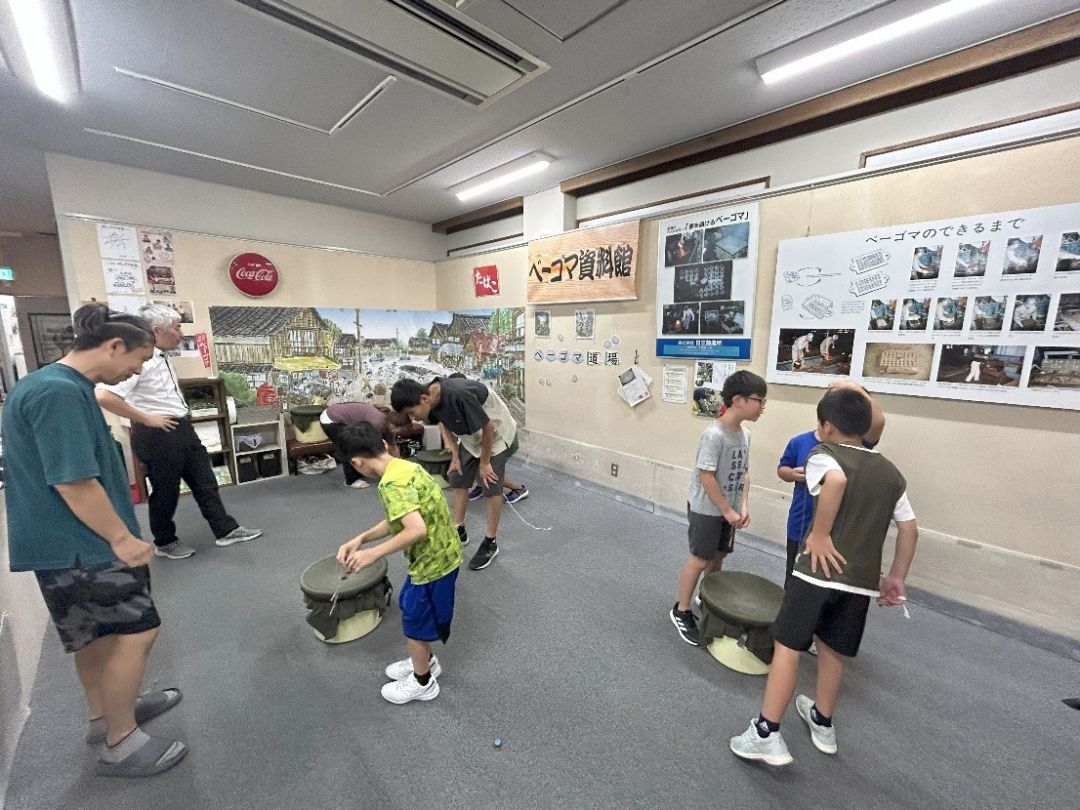
On the third floor of the Folk Museum, you will find a Beigoma playing space. Next to it lies a large collection of Beigomas. This collection was formerly displayed at Nissan Chuzoujo Foundry, a company specializes in producing Beigomas. The collection was transferred to the Folk Museum when the foundry moved to a new place with no available space for displaying this collection. Nissan Chuzoujo Foundry keeps producing Beigomas in Kawaguchi City as the sole Beigoma manufacturer in Japan.
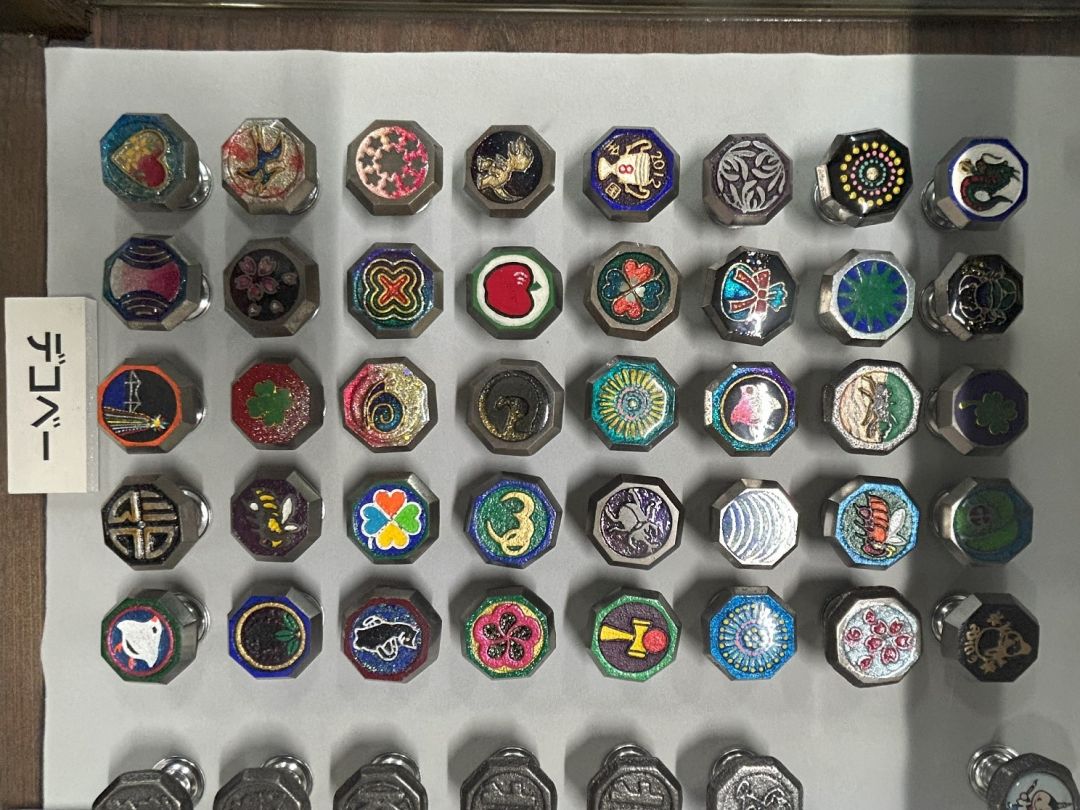
From the ones made in the Edo period to the ones recently made, the number of Beigomas in this collection reaches as many as 810! You also see a Bai-goma, which was made in the Edo period using a sea snail called Bai-gai shellfish, and Beigomas made of glass or porcelain from the wartime iron-shortage period. They even have beautifully decorated modern Beigomas. The collection attracts many visitors to come all the way from other prefectures such as Fukuoka, Kyoto, etc., even from abroad such as France, USA, etc. People from abroad are quite fond of Iron-made Beigomas because its appearance looks something like Shuriken-throwing knives, tools indispensable for Ninja. Indeed, Beigoma throwing form and Ninja’s Shuriken throwing form seem to have much in common.
On the day I visited, 8 children and 2 mothers were playing in the Beigoma playing space. Elementary schoolers, junior high schoolers, senior high schoolers; all different school age and from different schools. They say they easily make friends with each other once start playing Beigoma here. Not just spinning Beigomas, they were eagerly figuring out some ways to improve Beigoma performance such as to shave off the surface, etc. 2 elementary schoolers showed me their self-directed Summer Projects. They carried out experiments to find out how they can keep spinning Beigoma longer by comparing different heights and shaving patterns. Splendid!
They were also playing Beigoma matches. Formed groups of three to a group, they played it by the rules they made themselves. To make rules on their own is a good way to nourish their autonomy and cooperativeness, I thought. Another game style they were playing was an individual time trial that players spin Beigomas in turn on 5 small tables laying before them. Fun and strained atmosphere runs through at the same time. You know, the smallest table for Beigoma spinning has only 5 cm in diameter! I was surprised to see them spinning Beigomas on such a small space. Mr. Ide, he was such an Elementary school teacher who is good at enliven the atmosphere of the game. Children were all enjoying there.
Mothers said that at first, they were just watching children playing Beigomas. But seeing them enjoying the games made mothers feel like to give it a go themselves. Mothers also were very good players. Beigoma, it is the game which anybody can enjoy regardless of generation and gender.
Mr. Ide sometimes visits elementary schools to hold Beigoma lesson. Once children start playing Beigoma, their faces will be lighten-up and start slapping high-fives each other. Even a no-Japanese speaking child can made friends with others as if there are no language barriers among them. He says you ought to bring children with roots in other countries to the Folk Museum to enjoy Beigoma together.
At the Folk Museum, Mr. Ide is waiting for you all to teach you about Beigoma, or holding Beigoma mini-matches on every week, either on Saturday or on Sunday. I really recommend you visit there. I guarantee you will be fascinated by the world of Beigoma. To provide a tertiary place which child can feel belong to gives some sense of security to both children and its parents. At the same time, it encourages the local community mind among residents in the area.
Kawaguchi Municipal Cultural Asset Center « Folk Museum » :
Address: 1-22, Hatogayahoncho 2-chome, Kawaguchi City, Saitama Prefecture 〒334-0002
URL:https://www.kawaguchi-bunkazai.jp/kyoudo/
【Editor’s note】
I told Mr. Ide that I used to play Beigoma when I was a child, then he offered me an occasion to play with it, saying “Would you like to try it again?”. I had a wonderful time. Thank you very much for giving me that special moment. by Masa