Place
Place
Contents
◆“CAFE ALI”; attracts people with a magical power 〜Café founded and loved by smiles of the community〜
◆A heartwarming place where people connect, “Kawaguchi- Shiba, a canteen which connects people”
◆Okinawan Cuisine Restaurant “Simajouri”
◆Breathing 96 years old Folk House & Space TsuKuRuBa Takezo
◆My First Experience of Thai Cuisine
◆Vietnamese Restaurant&Grocery Phúc Khang
◆〜COCINA GRILL〜Place you can touch with Philippine culture
"CAFE ALI”; attracts people with a magical power 〜Café founded and loved by smiles of the community〜
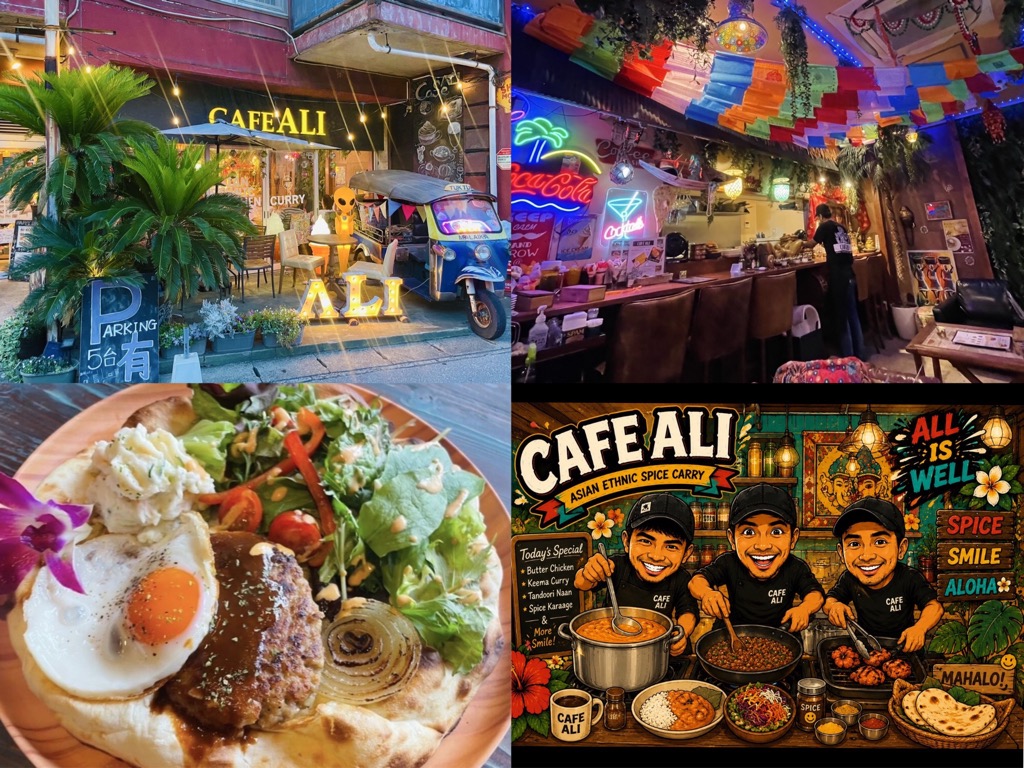
“CAFE ALI”; cultures from various places such as Hawaii, Nepal, Asia, etc. are nicely blended in here. The name is stemmed from Prince Ali from a famous Disney film “Aladdin”; with a wish “To make a cafe with a magical power to make everyone happy”.
Today, we had a talk about its elaborately produced yet fascinating menus and how they have made this cozy place which finally gained affections from locals.
■From exotic “Nepalese home-cooked meals” to original dishes! Multinational menus filled with happy expectation
As their word; “In the vibes of <Adopting anything> with no fixed style” goes, the greatest attraction of “CAFE ALI” is that you can enjoy dishes from various countries. It started with only 3 menus at first; curry, Hawaiian dishes, etc., though, menus increased one by one from their enthusiasm to “Want them to try more kinds”. A dish which drew my attention among them is “Nepali plate”, which you seldom have in other places.Since “CAFE ALI” sets up a clear distinction from what they call “India-Nepal curry restaurant”(※), which you often see in Japan. This cafe serves daily life-based “home-cooked meals” that local people are having every day, which attract people to come all the way to enjoy it.“Taco-Naan”, karaage deep-fried dishes, etc., of which tastes we can easily imagine can be seen on the menu to satisfy both your appetite and soul.
(※)Restaurants run mainly by Nepalese that serve Indian curries and springy-textured Naans of which tastes are arranged to suit Japanese palates.
■Concept of “Provide with joy, delight, lusciousness” to everyone.
To realize this idea, what “CAFE ALI” considers the most is “Cafe staff should be feeling happy working in here”. This principle appears on their menus. You can see charms and personalities of Mr. Aryal, Mr. Rohan and Mr. Raj, all Nepalese staff, on their profile section on the first page.
Japanese and Nepalese staff are working together, though, “We have never got a dispute since the start of this cafe”, they said. Mr. Rohan and Mr. Raj told me about hearty support system and affable workmates, saying, “I am lucky to be working here”, “I have no complaints working in here”.
■Involving neighborhood children from the preparation phase to make a place to be a hub in the community
Cordial relationship of the cafe with community had already started before the opening. Kids living on upper floors of the same building helped them out with wall decoration. To our surprise, a senior high school student who was in a helping squad as an elementary schooler back then has returned as a part-timer here.
“I opened this café with the idea of creating a place to serve as a Kodomo-shokudo (Children’s food program)”. The owner’s original ambition leads to provide free curry and rice, juice, etc., to children once a month. In summer season, they hold watermelon-splitting game and shaved-ice events, etc. in front yard. Starting from a deep affection towards children, ripples of support are fanning out in all directions. Now, some neighbors who support this concept are kind enough to bring freshly picked vegetables, toys, etc. to the café.
True to its concept of “Provide with joy, delight, lusciousness”, this “CAFE ALI” keeps making everyone happy with its exquisite menus from various countries and the magic of smiles of the staff. I really recommend you to visit this place once to enjoy its cozy atmosphere and tasty dishes.
CAFE ALI
1st floor, 34-32 Kitazonocho, Kawaguchi City, Saitama Prefecture
(15 minutes’ walk from Higashi-Urawa Station. 10 minutes’ bus ride from Warabi Station to Kitazono bus stop.)
048-234-8893
Open hours
11:00 - 15:00(L.O. 14:30)
17:00 - 22:00(L.O. 21:30)
Editor’s Note
“CAFE ALI”; exquisitely homey and full of warmth. A fantastic world expands before you from the moment you crossed the threshold. Just pop-in there is enough to fascinate you. On your own, with someone special or other casual companions, happy time is guaranteed whomever you will come with. Seira
Pass on old School Uniforms to Households in Need of Them “School Uniform Reuse Shop; Sakuraya Kawaguchi Shop”
Side by side with child’s body growth, school transfer, new school enrollment, etc., purchase of a new school uniform or replace it with a new one becomes inevitable. However, brand-new school uniforms and school materials cost too much, sometimes puts pressure on the family budget.
Sakuraya buys up unused school uniforms, etc. and sells them at reasonable prices to students needing them.
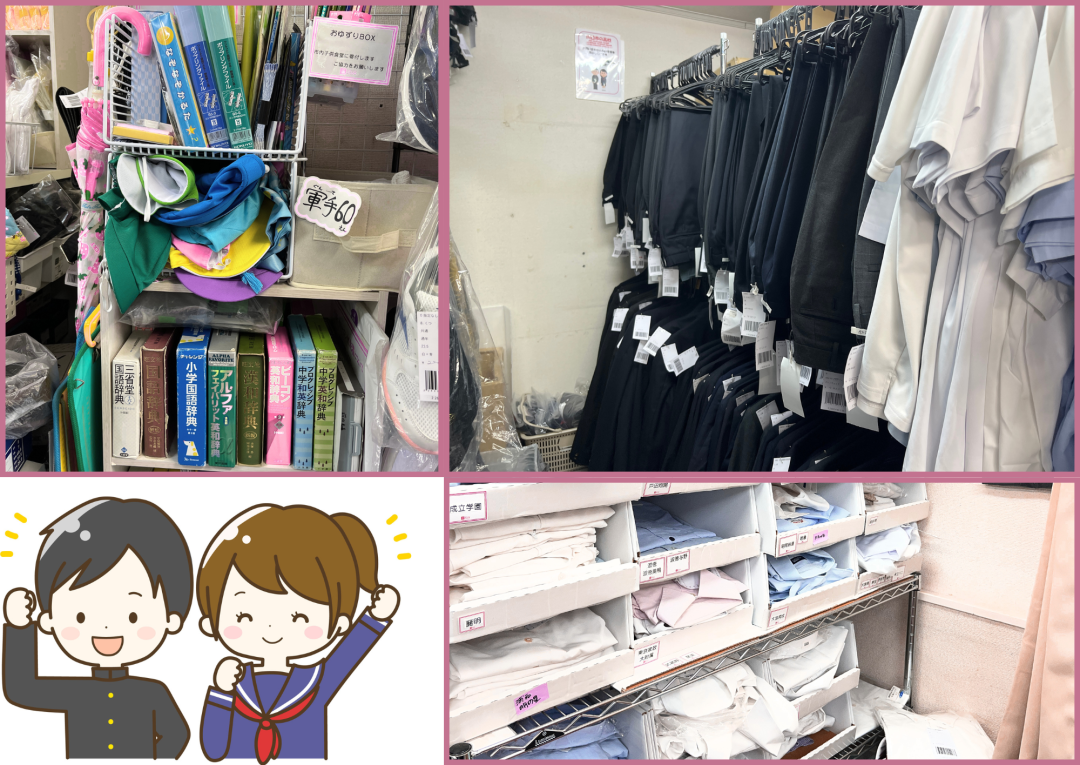
From school uniform to school bag, school essentials, etc., the shop stocks up with over 10,000 items.
In here, you will find school uniforms of municipal junior high schools in Kawaguchi City, of prefectural senior high schools and private senior high schools, also of private elementary schools and even of kindergartens. Also, coats and waist coats for winter season, Judo outfit for P.E. class at school, school cap (for elementary schoolers), municipal junior high school designated school bags and blue school bags, and a wide variety of learning essentials to be used at school are in stock there.
❑When you need to buy items
①Check the stock of items via phone or E-mail
【Information you need to provide】
・Name of school
・Student’s gender
・Student’s height
・Student’s waist measurement
※Give the size in figures as 70cm, 73cm, etc. Not by S/M/L size categorization.
②If the item you need is in their stock, visit the shop to try it on
You can try them on to check whether they fit you.
※In case you have a problem in speaking Japanese, bring someone who can supports you in the language.
【NOTE】Students’ school enrollment status or official admittance issued by school or kindergarten are always checked.
By Sakuraya’s principle to pass on school uniforms properly to those who are in desperate need of them, they always check school/kindergarten enrollment or admittance status before selling items.
【Students currently attending school】
・Attending school’s Correspondence App, etc. to prove the student’s school enrollment.
【Students scheduled to start school】
・Official Admittance issued by a school
・Application form for kindergarten enrollment, etc.
※Be sure to bring items to prove the student’s identity.
③Payment
・Cash
・PayPay
※Note that the shop is selling items at the lowest price possible. Price negotiation is not accepted.
❑When you want to pass on school uniforms.
You can bring school uniforms that are no longer needed from graduation, outgrow, etc. After quality check and valuation process, the shop decides whether they can buy the item or receive it as a donation.
Old school uniforms that you have been using with
great care will be passed on to the next students who are in desperate need of them.
【Before bring items to the shop】
・Items are not need to be dry-cleaned
・School uniform bringing-in time closes at an hour before the shop’s closing time.
❑Recommended season to search uniforms
School uniforms are in stock all year round. Here is the list of active periods when inquiries flood in.
|
Time of the year |
Specifics |
|
Around Dec.~Jan. |
Public Junior High Schools |
|
Around late Jan.~ |
Private Junior High Schools |
|
Mar. (from the announcement of successful examinees to Public Senior High Schools~for 2 weeks) |
Public Senior High Schools |
|
From late Apr. to early May (“Golden week”) ~ |
Summer uniforms |
The shop accepts inquiries on summer uniforms from after “Golden week” holiday.
Sakuraya is supporting child rearing households by delivering unneeded uniforms to the next generation. Make the best use of this shop when you try to find second-hand school uniforms, as well as wishing to pass old uniforms on to the next users.
School Uniform Reuse Shop Sakuraya; Kawaguchi Shop
e-mail:sakurayakawaguchi2018@gmail.com
Phone:090-9203-5381
Open: Mon/Thu/Fri(Weekdays) 16:00~19:00
Sun 12:00~17:00
(Closes if it falls on National holiday)
The shop has occasional closing day/substitute open day.
Recommend you to check details on the shop’s website.
Editor’s Note
“School Uniform Reuse Shop Sakuraya; Kawaguchi Shop” acts as an intermediator to secure the route of items to be delivered to the next users. Try to open the door first. We would like you to know that there is another option to get items from here. (Tomo)
A heartwarming place where people connect, “Kawaguchi- Shiba, a canteen which connects people”
“A canteen which connects people”――A place where people comes across and can feel comfortable
There are places that welcome whoever come regardless of nationalities, ages and positions in Kawaguchi-city.
One of them is a Children’s cafeteria, “Kawaguchi-Shiba, a canteen which connects people”, aiming to create a heartwarming and relaxing place.
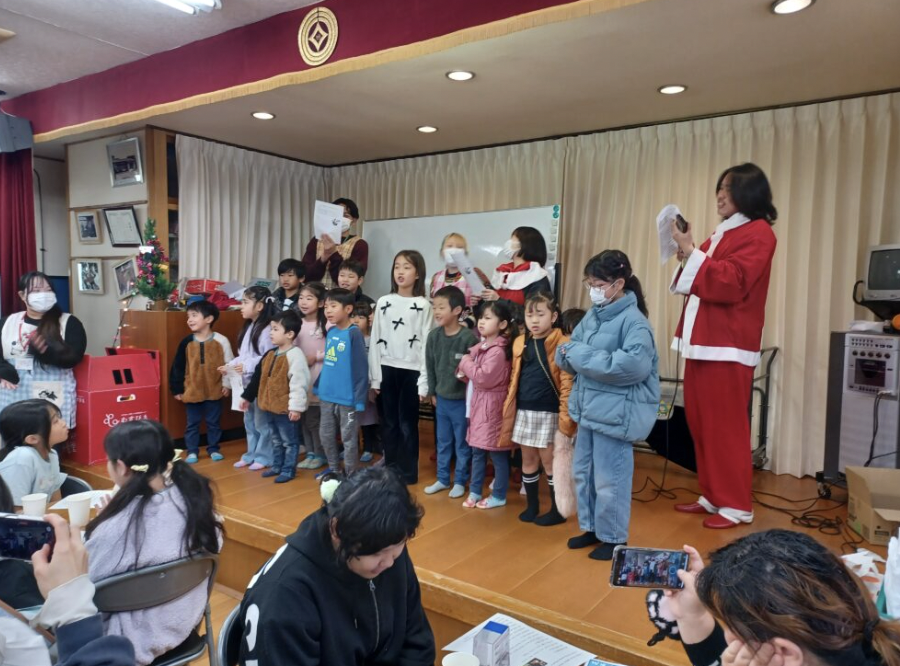
The canteen is a facility which doesn’t only serve meals but also holds events, which are Halloween in October and Christmas event in December. People from children to adults can enjoy them together.
People are gradually connected then expanded their circle little by little. We can feel it as a place of local community,” It’s okay to be here.”
The beginning was from his wish, “I want to create activities which are rooted in the local community.”
It was Taguchi-san that started up “Kawaguchi-Shiba, a canteen which connects people.” He had been involved in the field of education and welfare for a long while so far.
He’s had been facing many children through his job on one hand. On the other hands he looked back, “I myself haven’t got involved in local community.”
He thought, “I wondered how to live my life from now on.” when he became 70 years old. He decided to start up Children’s cafeteria as he thought, “I want to start up activities which are rooted in local community.
He said there was a lot of things he couldn’t get done as it was the first time for him, for example, struggles in looking for members and places where they are taken place. During that time he found a brochure of Saitama Mirai University and applied for the course he can study “Creating places where children can belong to.” Based on what he learned and people he got acquainted there, he started “Kawaguchi-Shiba, a canteen which connects people” in May in 2022.
Welcome anybody. It doesn’t matter nationalities and reasons.
There used to be a few users at the beginning, though, each time they have 70 to 80 users. At the most,they have more than 90 users . About 50 of them are children.
Many of them are elementary and junior high school students. Some are families that parents and children come together to eat then go back home. Others are children who say due to various reasons, “Today I’ll go home bringing Bento".
At same time there are events, for example, Halloween. At that time everybody is in disguise on one hand. International students show their own culture on the other hand. Everybody has joyful time together.
There was a child who took part in an event who wrote his impression, “It’s fun. I’ll come here every time. I also love curry rice. Foods are yummy. I’m happy".
Today at “Kawaguchi-Shiba, a canteen which connects people,” they hold events once a month. In addition serve curry rice.
A place which is created with local people
Now “Kawaguchi-Shiba, a canteen which connects people” is created with many people.
They work in cooperation with local welfare and educational public institutions, groups and enterprises. In addition teachers and students of Saitama Gakuen University prepared for events. Farthermore international volunteer could participate in events through the connection with Saitama Prefecture International Association.
Through these activities voices from local people like “I want to take part in activities together.” and “I need something to talk.”, began to trickle in,they said. Circle of community is spreading steadily in the center of children.
Developments from now on
Taguchi-san told that in the future he wants to increase the number of places where regional people across generations can feel connected. He gave three examples. First is the places we can have a drink. Second is places we can talk in a relaxing mood. Third is places we can drop by.
“Kawaguchi-Shiba, a canteen which connects people” is one of the places when you think,” I want to be connected with someone else.” Even though they don’t have special purposes.
Please have a drop in us by all means if you think these things. For examples, “I want to be connected with regions.”, “I want to be connected with others.” and “I want to eat delicious curry rice.”
“Kawaguchi-Shiba, a canteen which connects people”
・He opens Children’s cafeteria irregularly once a month.
・Please have a look at HP for further information.
https://tsunagaru-shokudo.com/about/
Editor’s note
It is Taguchi-san that started new things when he was 70 and realized his dream which were “Activities rooted in local community one after another. He gave me a lot of heartwarming power through his talk! Seira
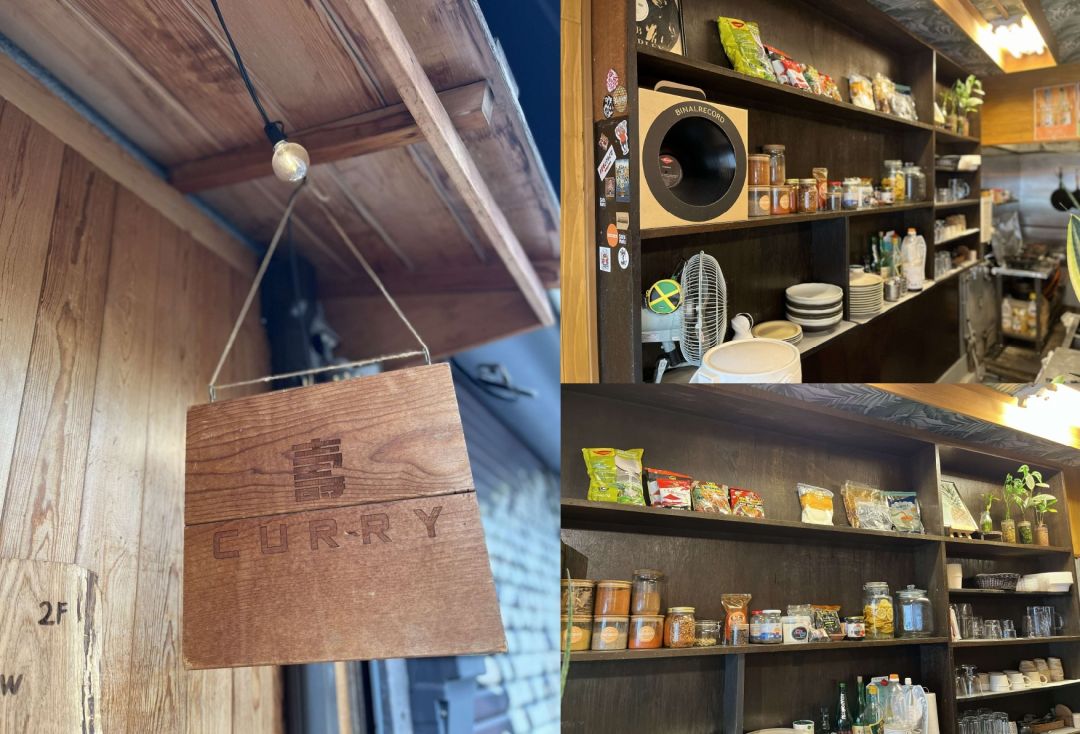
Sri Lankan Curry Restaurant “KOTOBUKI CURRY” ~Dish packed with spices, carrying his sterling passion~
Wafting scent of spices greets you there; “Sri Lankan Curry Restaurant KOTOBUKI CURRY”
What you will find is layers of appetizing aroma of spices and a touch of sweetness of coconut milk.
This restaurant that gives strong tropical vibes the moment you open the door is in Naka-aoki, Kawaguchi, along the Chuo-Doro Avenue.
Inside, there are five counter seats and two tables for two.
How I appreciate this coziness of a smallish place with the warmth of wood that makes you feel at home whenever you visit on your own, with friends or families.
◆Meeting a Sri Lankan “Mum” ignited all
It was “Okasuba Curry” in Ohanajaya, Katsushika Ward, at which Mr. Otomo, the owner, first knew Sri Lankan curry.
He was touched by Sri Lankan “Mum’s” curry with full of hominess and love.
“That Mum’s curry had a taste of the plainest ‘Good old home cooking’”
He felt it was his mission to make this taste widely known. After spending apprenticing time at Okasuba Curry, he opened his own restaurant.
A dish touched with ‘The warmth of Mother’s love’ became the base of “KOTOBUKI CURRY”.
◆Mix everything together before savoring; this is Sri Lankan Style
The distinctive features of enjoying Sri Lankan curry is “Mix everything together before you eat”. A plate is colorfully served with several varieties of curries and side dishes.
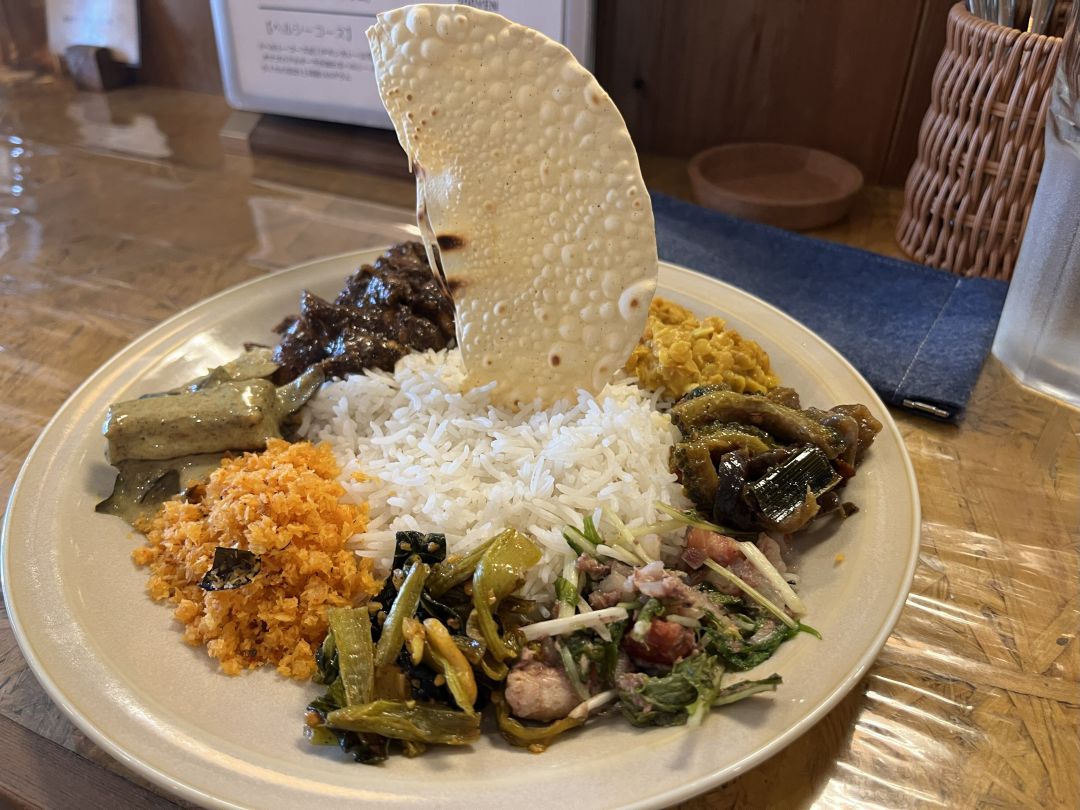
I ordered “Five varieties’ platter for ladies” on the day I visited.
The platter is served with indispensable duo of Sri Lankan chicken and Dhal, added by a seasonal curry and two types of side dishes.
Bone-in section of chicken wings are used in this staple Sri Lankan chicken curry. Well-boiled meat is tender enough to come loose in the bowl, and the aroma of spices starts to waft in the air.
It is wonderful to discover that Umami-savory and bitter-sweetness of some dishes as Sardine and Mizuna salad, stir-fried Goya-bitter melon, etc., marks well-balanced accents to show different flavor as you eat.
Deliciously grilled light cracker “Papad” is garnished on top of Basmati, fragrant long-grain Sri Lankan rice. I crushed it to small pieces with my hand to enjoy with curry. Crispy texture brought another dimension to the feast.
Every single imported raw Papads are carefully grilled in his restaurant kitchen.
His enthusiasm is gathered on this one plate.
“You know, spices are ‘Herbal medicine’ that get you in good shape. I am giving attention to what I choose as ingredients and how I cook, also wishing every customer will get energized after enjoyed meal here”
Indeed, it is a dish that lightens your mind and body with every bite you take.
◆Beloved food culture in Sri Lanka
Sri Lanka is a verdurous tropical island located in the southeast of India. It is gross area is about 80 % of that of Hokkaido.
The wind sways coconut trees to send tropical vibes to the street. Curries with plenty of spices are loved by people there as one of their national cuisines. Its distinctive feature is non-greasiness, and lots of cuisines are packed with “the Wisdom of Food” which supposed to get you in shape.
In the country where the world-renowned tea aroma and fragrant spices are harmonizing in daily life. For them, “Eating” is naturally linked with “Healing”.
◆A dish of sincerity with a living courtesy and passion
Once entered the place, I was welcomed with smiles of the owner and staff. Sincerity came out through their well-mannered service.
The owner used to be an athlete who played on baseball fields as a high school baseball player. The courtesy and persistence learned from that experience are clearly shown on every sublimated dish and gentle atmosphere of this restaurant.
◆“Wish to grow in step with this restaurant”; Realizing long-cherished vision
“My wish is that I can grow in step with this restaurant”
True to the oath, his countless efforts began to produce fruits. The restaurant has become that popular with long waiting lines appear on each weekend.
Each dish made by the owner who keeps going forward not only stimulates you with spices, but impresses you with unfeigned warmth that is true to his visions. A tale of KOTOBUKI CURRY has just begun.
KOTOBUKI CURRY
Open 11:30~15:30(Last orders 15:00)
18:00~21:30(Last orders 21:00)
Closed on Sun・Mon・Tue
Editor’s NOTE
Wrapped in the aroma of spices, I know I will come back here.
It satisfies your stomach as well as your mind.
“KOTOBUKI CURRY” is a place you will find such fantastic dish. Even now, having finished this interview, that aroma still comes back to me sometimes. “Human touch” behind spices must be the quintessence of this restaurant. (TOMO)